Launch and scale your apparel business with trusted dropshipping suppliers across India. Discover wholesale apparel manufacturers, private label opportunities, fast shipping, and premium fashion categories including men's, women's, kids' wear, activewear, and accessories.
Apparel Categories
Shipping
Profit Potential

Apparel Suppliers
Available
Shipping
Apparel Dropshipping in India is an ecommerce business model where online retailers sell apparel products without maintaining inventory. When a customer places an order, the supplier packs and ships the product directly to the customer. This allows businesses to launch an online apparel store with lower investment, reduced operational costs, and access to a wide range of clothing categories including men's apparel, women's fashion, kids' wear, ethnic wear, activewear, and fashion accessories.
Low initial investment with no warehouse or inventory requirements.
Suppliers manage inventory, packaging, and order fulfillment.
Many suppliers provide domestic shipping across India within 24–72 hours.
Some apparel manufacturers offer branding, custom labels, and private label services.
Apparel dropshipping enables entrepreneurs to launch an online fashion business with minimal investment, flexible operations, and access to India's growing apparel manufacturing ecosystem.
Start your apparel business without purchasing inventory upfront. Invest primarily in your ecommerce store and marketing while suppliers handle stock.
Suppliers store, pack, and dispatch products directly to customers, allowing you to focus on sales and customer experience.
Many apparel manufacturers support private label services, enabling businesses to build unique fashion brands with custom packaging and labels.
Partner with suppliers offering reliable shipping across India to deliver apparel products efficiently and improve customer satisfaction.
Sell men's apparel, women's fashion, kids' clothing, ethnic wear, activewear, denim, winter wear, and accessories from one platform.
Expand into new apparel categories, marketplaces, and regions without managing warehouses or increasing inventory costs.
India's apparel industry continues to expand with increasing ecommerce adoption, growing demand for private label brands, and strong manufacturing capabilities across multiple regions. Understanding these trends helps businesses identify promising apparel categories and sourcing opportunities.
India has established apparel manufacturing hubs specializing in knitwear, ethnic wear, denim, winter clothing, activewear and fashion garments.
Men's apparel, women's fashion, kids' clothing, ethnic wear, sportswear, premium basics and fashion accessories.
Many domestic suppliers provide nationwide shipping, supporting faster order fulfillment for ecommerce businesses.
Numerous manufacturers offer private label, custom branding, packaging and white-label apparel solutions.
Apparel remains one of the most active product categories across online marketplaces and independent ecommerce stores.
Evaluate suppliers based on apparel specialization, product quality, shipping capability, communication, and business information instead of selecting suppliers based solely on price.
India is home to several well-known apparel manufacturing regions, each recognized for different product specializations. Understanding these manufacturing hubs helps businesses identify suitable suppliers for fashion, wholesale, private label, and dropshipping opportunities.
Widely known for knitwear, cotton t-shirts, polo shirts, innerwear, sportswear and export-quality garments.
Recognized for women's apparel, sarees, dresses, ethnic fashion, western wear and textile production.
Specializes in winter garments including sweaters, jackets, thermals, hoodies and woollen apparel.
Known for handcrafted apparel, ethnic fashion, block prints, kurtis and boutique clothing collections.
Major wholesale apparel market offering men's wear, women's fashion, kids clothing and fashion accessories.
Popular for premium apparel manufacturing, activewear, sportswear, corporate clothing and export garments.
Build a successful apparel business by choosing the right product category. From everyday basics to premium fashion collections, explore categories that align with your business goals and target audience.
T-shirts, shirts, jeans, hoodies, jackets, trousers, shorts, formal wear and premium casual fashion.
Dresses, kurtis, sarees, western wear, ethnic collections, tops, co-ords and premium fashion.
Baby clothing, kids fashion, school wear, casual wear, festive collections and accessories.
Gym wear, yoga apparel, fitness clothing, sportswear, athleisure and performance fabrics.
Sarees, kurtas, lehengas, salwar suits, festive apparel and traditional Indian fashion.
Handbags, wallets, belts, caps, scarves, jewellery and complementary fashion products.
Choosing the right apparel supplier involves more than comparing prices. Solfru helps businesses evaluate manufacturers and suppliers using practical sourcing considerations such as product specialization, communication, fulfillment capabilities and business information.
Different manufacturing regions are known for different apparel categories. Understanding regional strengths helps businesses identify suppliers that match their product requirements.
Rather than comparing suppliers only on pricing, Solfru encourages businesses to evaluate product range, communication, fulfillment capability and business information.
Businesses often explore categories such as oversized fashion, premium basics, activewear, ethnic collections and coordinated apparel to diversify their product offerings.
Many new businesses rush supplier selection without comparing samples, shipping capabilities, product quality or business information.
Estimate your expected profit, gross margin and selling performance before launching your apparel business.
₹1200
₹870
₹330
38%
Your current pricing indicates a healthy projected margin. Continue comparing suppliers, product quality, fulfillment capabilities and customer demand before launching your apparel store.
Choosing an apparel supplier involves reviewing several important factors. The timeline below illustrates a structured approach businesses can use when evaluating potential suppliers for dropshipping or wholesale partnerships.
Review the supplier's business profile, product categories, and available contact information before starting discussions.
Compare apparel categories, product specifications, images, materials, and available size options.
Understand shipping methods, estimated delivery timelines, service coverage and packaging practices.
Evaluate responsiveness, clarity of communication and willingness to answer sourcing questions.
If relevant, discuss private label services, custom packaging and branding capabilities.
Compare multiple suppliers before making a decision. Consider product fit, communication, pricing and fulfillment capabilities together.
Before partnering with an apparel supplier, review the key areas below. A structured evaluation can help businesses compare suppliers more effectively and identify those that align with their sourcing requirements.
Review business profile, company details and contact information.
Ensure the supplier specializes in the apparel categories you plan to sell.
Understand delivery coverage, shipping timelines and fulfillment methods.
Ask whether branding, custom labels and packaging services are available.
Check whether clear, high-quality product images and descriptions are provided.
Evaluate response times and the clarity of supplier communication.
Understand return, exchange and replacement policies before placing orders.
Discuss minimum order quantities, payment methods and packaging expectations.
India's apparel industry includes manufacturing regions with different product specializations. Understanding these regional strengths can help businesses identify suppliers that align with their sourcing requirements.

Choosing the right apparel niche can help businesses focus their product selection, understand customer demand, and build a stronger brand. Explore some of the popular apparel categories commonly sold through ecommerce stores.
Casual oversized fashion continues to attract customers looking for comfortable everyday apparel and streetwear-inspired styles.
Trending CategoryShirts, trousers, jackets and premium basics remain popular categories for online apparel businesses.
Strong DemandDresses, co-ords, ethnic wear and western apparel provide opportunities across multiple customer segments.
High VarietyFitness apparel, athleisure and performance clothing continue to grow alongside health and wellness trends.
Growing SegmentChildren's clothing includes everyday wear, festive collections and school essentials for different age groups.
Repeat PurchasesTraditional apparel such as kurtas, sarees and festive collections remain popular throughout the year.
Seasonal DemandBags, belts, wallets, caps, scarves and jewellery complement apparel stores and increase average order value.
Cross-SellingSolfru helps entrepreneurs, ecommerce businesses and retailers discover apparel suppliers, compare sourcing options and explore different product categories. The platform is designed to simplify supplier research and support informed sourcing decisions.
Browse apparel suppliers across multiple product categories including men's apparel, women's fashion, kids' clothing, ethnic wear and accessories.
Compare suppliers based on product categories, fulfillment options, communication, business information and sourcing requirements.
Explore suppliers offering casual wear, premium fashion, sportswear, winter wear, boutique apparel and private label opportunities.
Identify suppliers that provide custom branding, private label and packaging services for businesses building their own apparel brands.
Access buying guides, sourcing information, supplier comparison tools and apparel industry content to support business decisions.
Whether you're starting a new store or expanding an existing business, Solfru helps you explore apparel sourcing opportunities more efficiently.
Discover suppliers suitable for ecommerce stores, marketplaces and independent online brands across India.
Explore suppliers across fashion, apparel and accessories while comparing different product categories in one place.
Different ecommerce platforms offer different advantages. Compare the most popular platforms used by apparel businesses in India and choose the one that best fits your business goals.
For businesses launching a dedicated apparel brand, a standalone ecommerce website typically provides greater flexibility for branding and customer experience than relying solely on marketplaces. Many businesses combine their own website with selected marketplaces to broaden their reach.
Every apparel supplier offers different strengths. Rather than selecting a supplier based only on pricing, compare multiple factors that affect your business and customer experience.
Choosing the right apparel supplier involves understanding your target customers, product categories, sourcing requirements and long-term business goals. This step-by-step guide can help you make more informed purchasing decisions.
Decide whether you want to sell men's apparel, women's fashion, kids' clothing, ethnic wear, sportswear or fashion accessories before searching for suppliers.
Review product categories, apparel quality, shipping options, communication and business information instead of comparing suppliers only by price.
Review available shipping methods, delivery timelines, service areas and packaging options before listing products.
If you plan to build your own apparel brand, discuss private label services, packaging and custom branding opportunities.
Calculate your expected selling price, total costs and estimated profit margins before launching your online apparel store.
Launch with a focused apparel category, monitor customer feedback and expand your product range based on market demand.
Selecting an apparel supplier is an important business decision. Understanding common sourcing mistakes can help businesses compare suppliers more effectively and reduce potential challenges during the sourcing process.
Lower pricing does not always indicate the best supplier. Product quality, communication, shipping capabilities and overall suitability are also important considerations.
Review product specifications, materials, sizing information and available product images before selecting a supplier.
Understand shipping methods, delivery timelines and service coverage before listing products in your online store.
Responsive communication is valuable when discussing product information, fulfillment requirements and future business needs.
Businesses planning to develop their own apparel brand may benefit from discussing private label and packaging services early.
Comparing multiple suppliers provides a broader understanding of available product categories, fulfillment options and business capabilities.
Review return, replacement and exchange policies before placing orders to understand how customer issues may be handled.
Many businesses begin with one focused apparel niche and gradually expand their catalog after understanding customer demand.
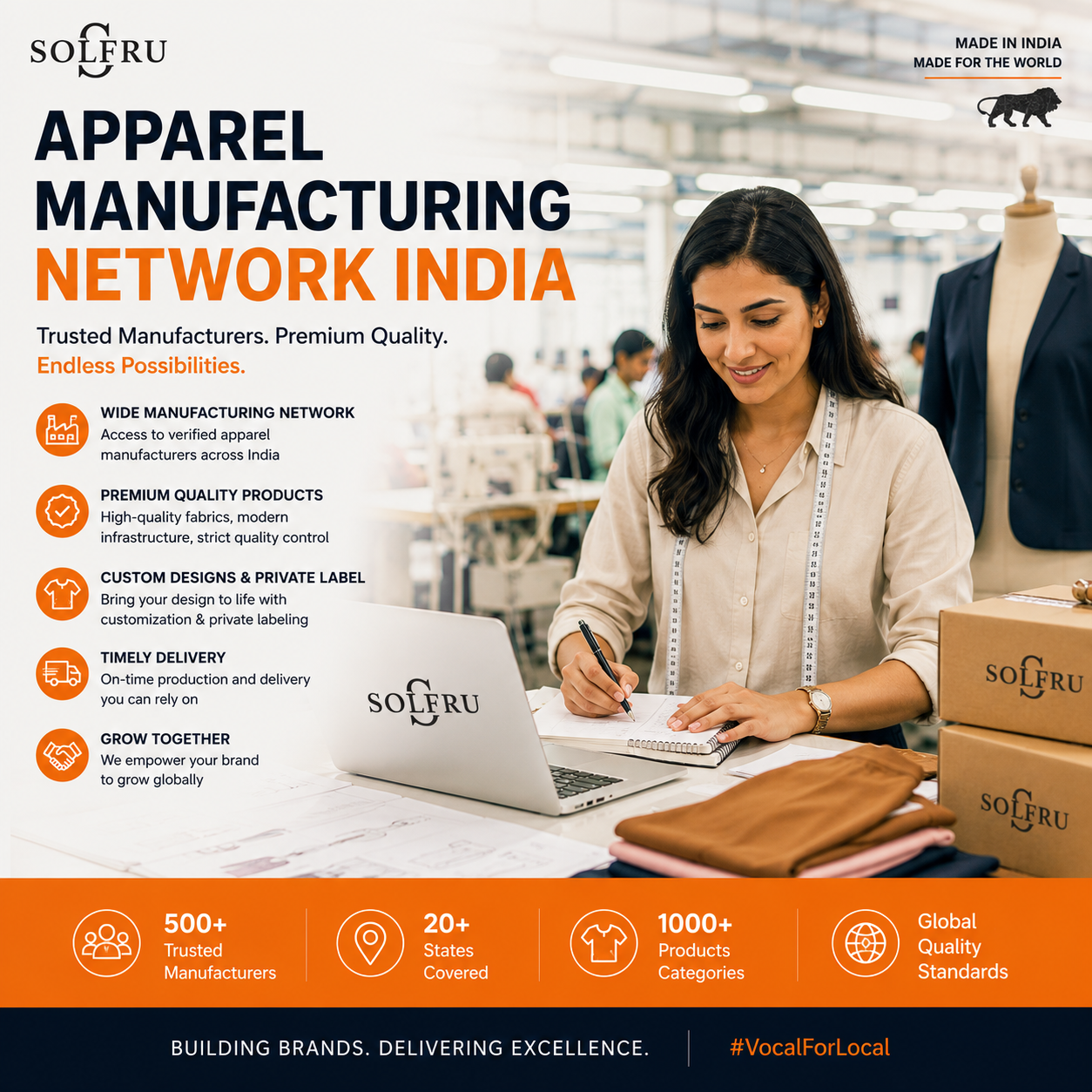
Private label apparel allows businesses to sell clothing products under their own brand. Instead of manufacturing garments themselves, businesses can work with manufacturers or suppliers that offer branding and customization services.
Decide whether you want to launch men's apparel, women's fashion, kids' clothing, sportswear, ethnic wear or fashion accessories.
Develop your own brand name, logo, packaging style and product positioning before discussing branding options with suppliers.
Discuss available customization options such as labels, hang tags, packaging, colours, sizing and garment specifications.
Review packaging options including branded boxes, poly mailers, thank-you cards and inserts to create a consistent customer experience.
Evaluate product materials, stitching, finishing and sizing information before introducing products under your own brand.
Begin with a focused collection, gather customer feedback and expand your product range as your apparel brand grows.
Here's a concise overview of the key concepts covered on this page to help you understand apparel dropshipping, supplier selection, and private label opportunities.
Apparel dropshipping in India is an ecommerce model where businesses sell clothing products without maintaining inventory. After an order is placed, the supplier prepares and ships the product directly to the customer.
Businesses often compare suppliers based on product categories, apparel quality, communication, shipping capabilities, private label options, return policies and overall business suitability rather than price alone.
Popular apparel categories include men's clothing, women's fashion, kids' clothing, activewear, ethnic wear and fashion accessories. Businesses looking to build their own brand may also explore private label apparel manufacturers offering customization and branding services.
Choosing a focused apparel niche, comparing multiple suppliers and understanding customer demand can support better sourcing decisions and long-term business growth.
Men's Apparel, Women's Fashion, Kids Clothing, Activewear, Ethnic Wear and Accessories.
Explore apparel manufacturing hubs that specialize in different product categories.
Many manufacturers provide branding, labels, packaging and customization services.
Compare suppliers based on quality, communication, shipping and business information.
A successful apparel business is built by selecting suppliers that align with your product strategy, customer expectations and long-term brand goals. Comparing multiple suppliers and understanding their strengths can help you make more informed sourcing decisions.
Find answers to common questions about apparel dropshipping, supplier selection, private label opportunities and starting an online apparel business in India.
Apparel dropshipping is an ecommerce business model where online retailers sell clothing products without maintaining inventory. After a customer places an order, the supplier prepares and ships the product directly to the customer.
Compare suppliers based on product categories, apparel quality, communication, shipping options, return policies, business information and overall suitability for your business rather than selecting a supplier based only on price.
Yes. Some apparel manufacturers and suppliers offer private label services such as custom labels, packaging and branding that may help businesses launch their own apparel brand.
Popular categories include men's apparel, women's fashion, kids' clothing, activewear, ethnic wear and fashion accessories.
Estimate your selling price, product cost, shipping charges, marketplace fees and other expenses to calculate your expected profit and gross margin before listing products.
Review product quality, communication, shipping methods, business information, product categories, branding options and return policies before making a sourcing decision.
Many apparel businesses sell through Shopify, WooCommerce, Amazon, Flipkart, Meesho, Magento, Wix and BigCommerce depending on their business goals.
Private label apparel refers to clothing products manufactured by a supplier and sold under your own brand using custom labels, packaging or branding elements.
Continue learning about apparel sourcing, ecommerce platforms, supplier selection and fashion business strategies through our comprehensive collection of guides.
Complete guide covering suppliers, marketplaces, profit margins and business strategies.
Read Guide →Discover fashion suppliers, trending niches and online selling opportunities.
Read Guide →Explore suppliers specializing in men's apparel, casual wear and premium fashion.
Read Guide →Learn about women's fashion suppliers, ethnic wear and western apparel.
Read Guide →Find children's apparel suppliers and understand category opportunities.
Read Guide →Discover suppliers for handbags, wallets, jewellery and fashion accessories.
Read Guide →Build your own apparel brand with private label manufacturing and branding.
Read Guide →Explore apparel manufacturing hubs and supplier categories across India.
Read Guide →Here's a quick summary of the most important insights from this Apparel Dropshipping in India guide.
Instead of selling every clothing category, begin with one focused niche such as men's apparel, women's fashion, kids' clothing or fashion accessories.
Evaluate suppliers based on product specialization, communication, fulfillment capabilities, shipping options and business information instead of price alone.
Estimate product cost, shipping, marketplace fees and selling price before listing apparel products in your store.
If appropriate for your business, explore suppliers that offer private label services including custom labels, packaging and branding.
Select an ecommerce platform that aligns with your business goals, product catalog and long-term growth plans.
Use related guides, supplier comparisons and buying resources to strengthen your sourcing strategy and expand your apparel business.
Whether you're launching your first ecommerce store or expanding an existing apparel business, compare suppliers, explore manufacturing hubs and discover sourcing resources to help you make informed business decisions.
👕 Apparel • 👗 Fashion • 🧒 Kids Clothing • 👜 Accessories • 🏷 Private Label